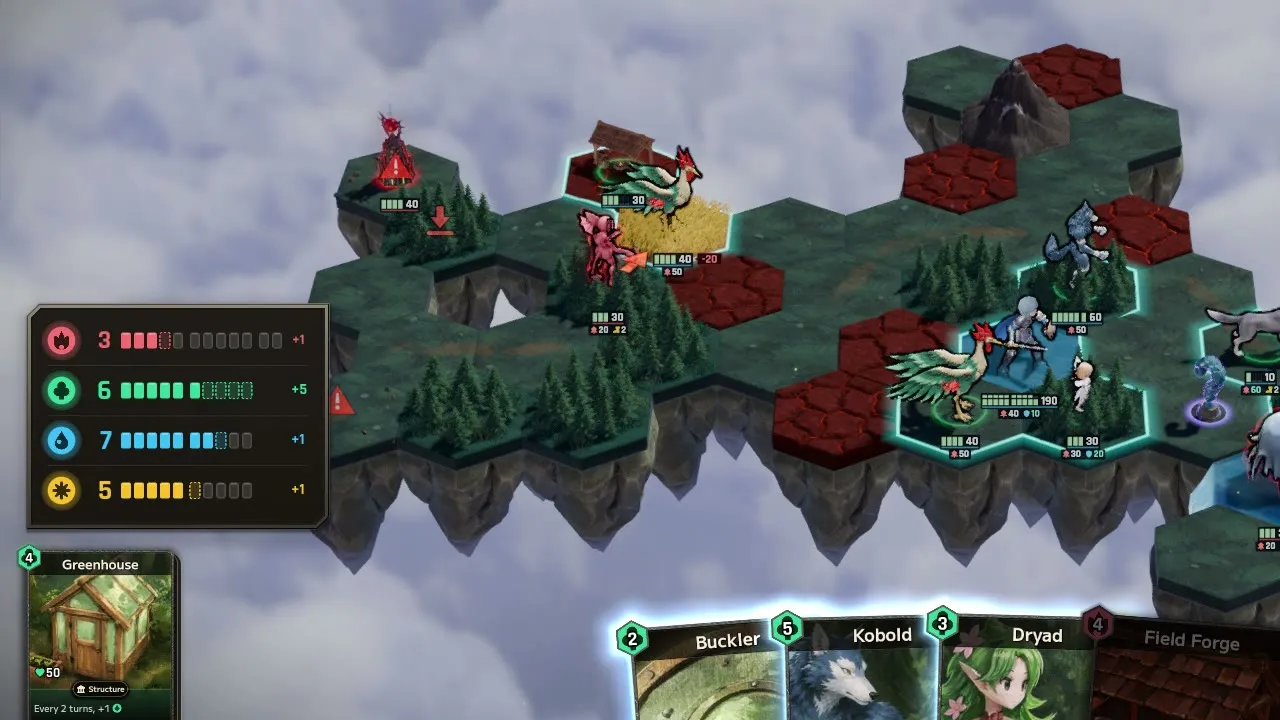
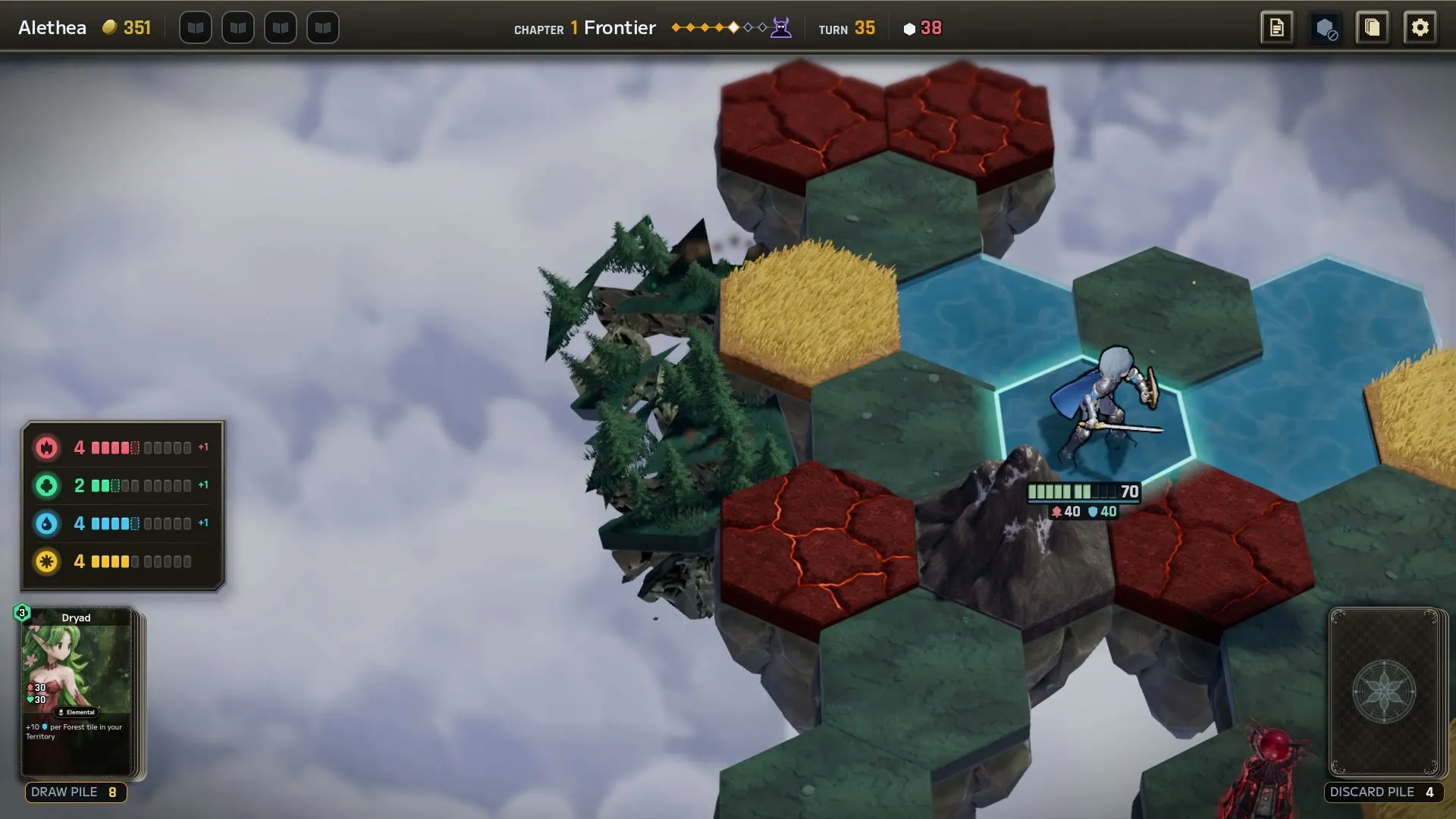
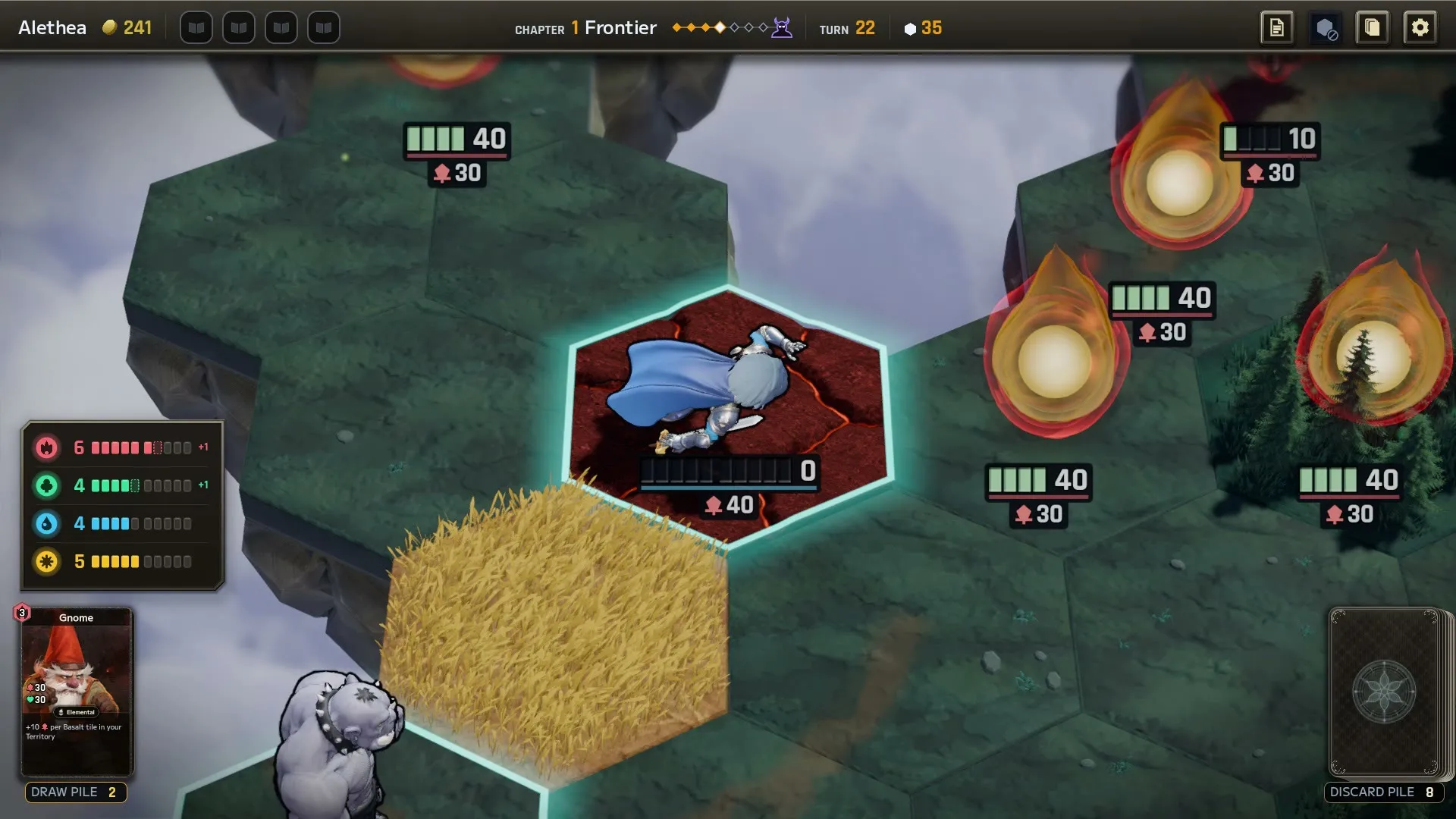
In Everbrink, you take one turn after another to bring down the enemy stronghold and clear one phase, the battle for a single island. Then you join the next island, clear phase after phase, and carry one run forward. This page first covers how to read the board and introduces your leader, then explains what you can do in a turn, in a phase, and over a run, along with what tends to confuse first-time players.
The Basics
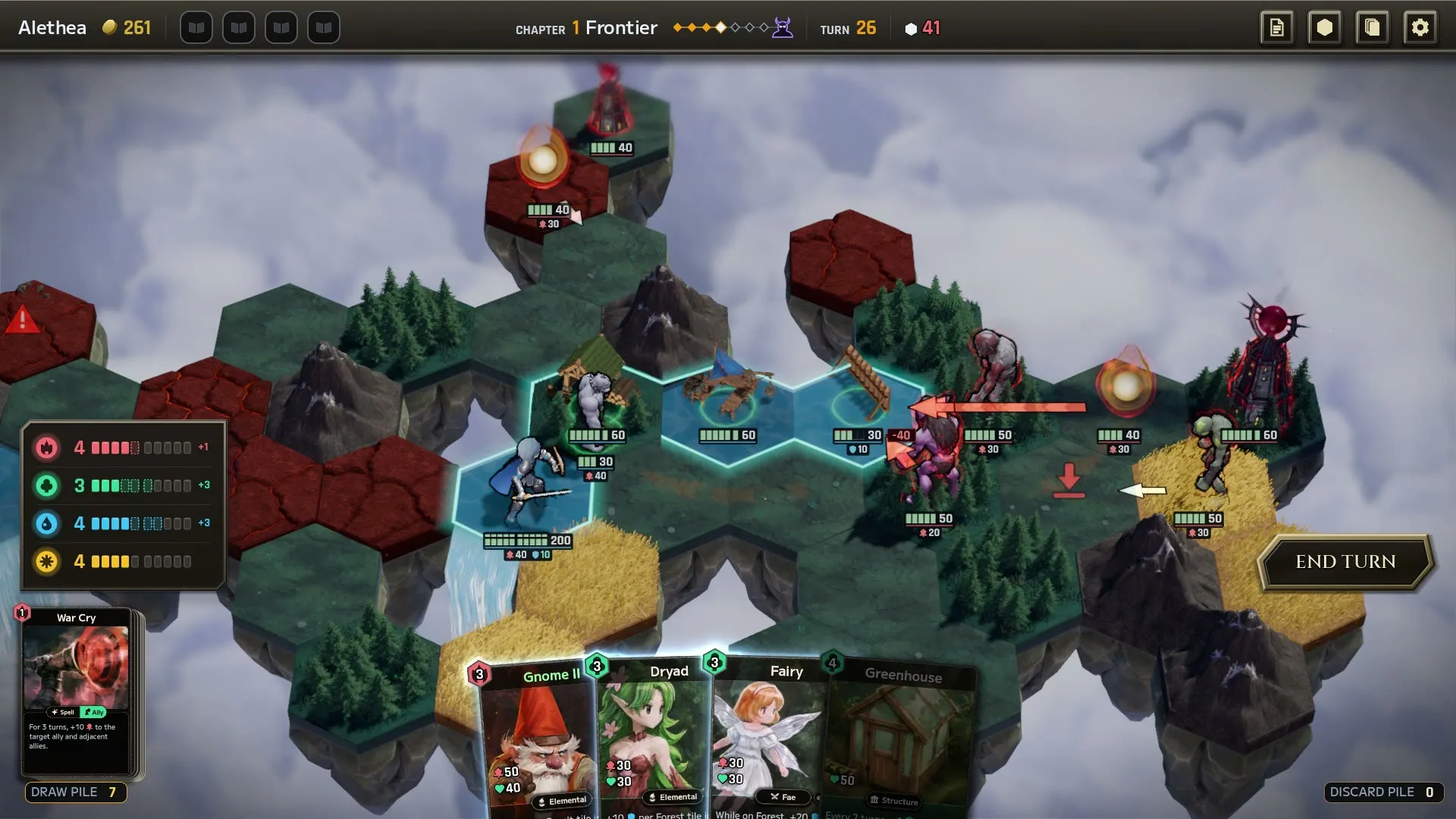
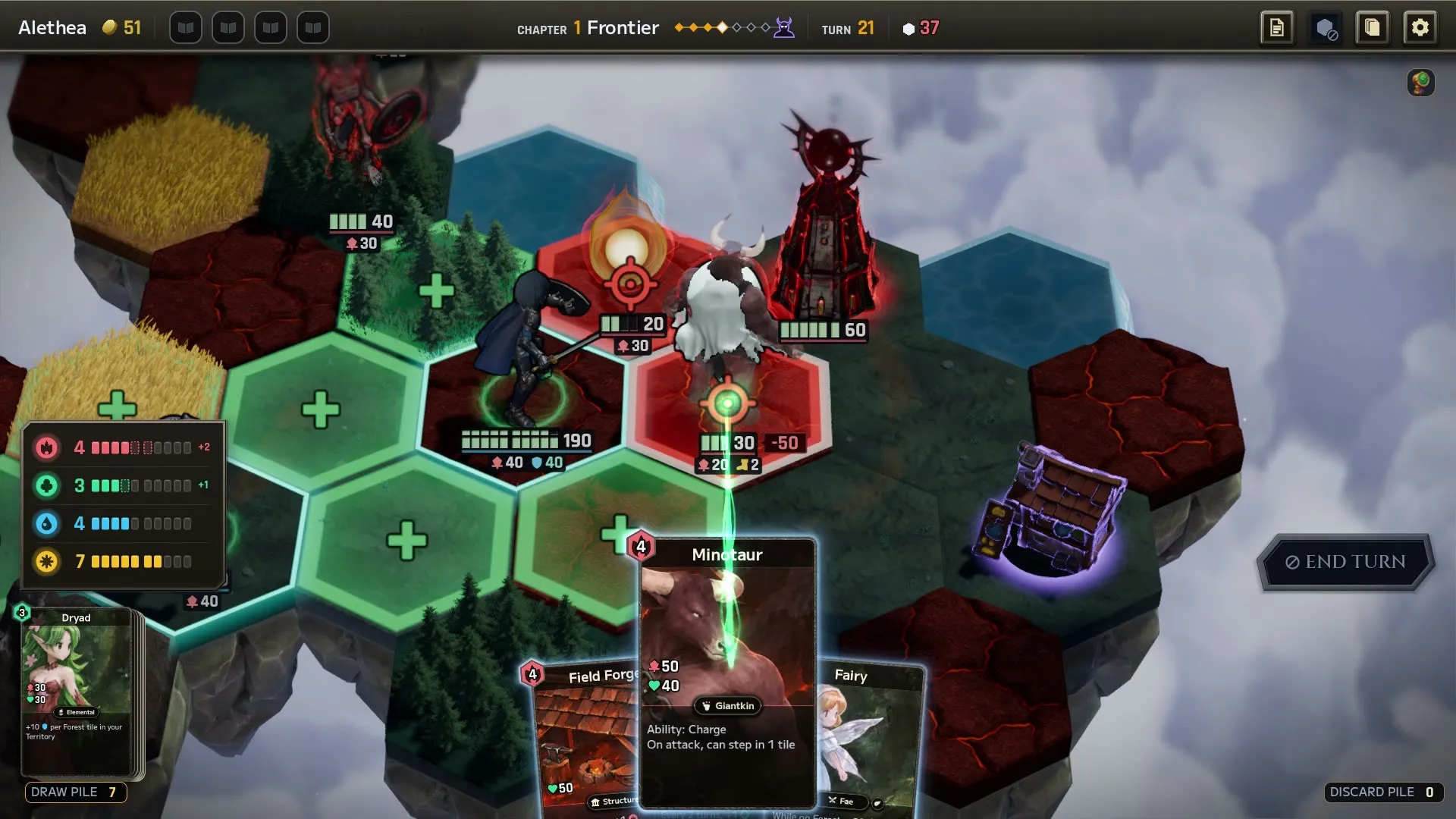
Reading the board
1 2 3 4 5
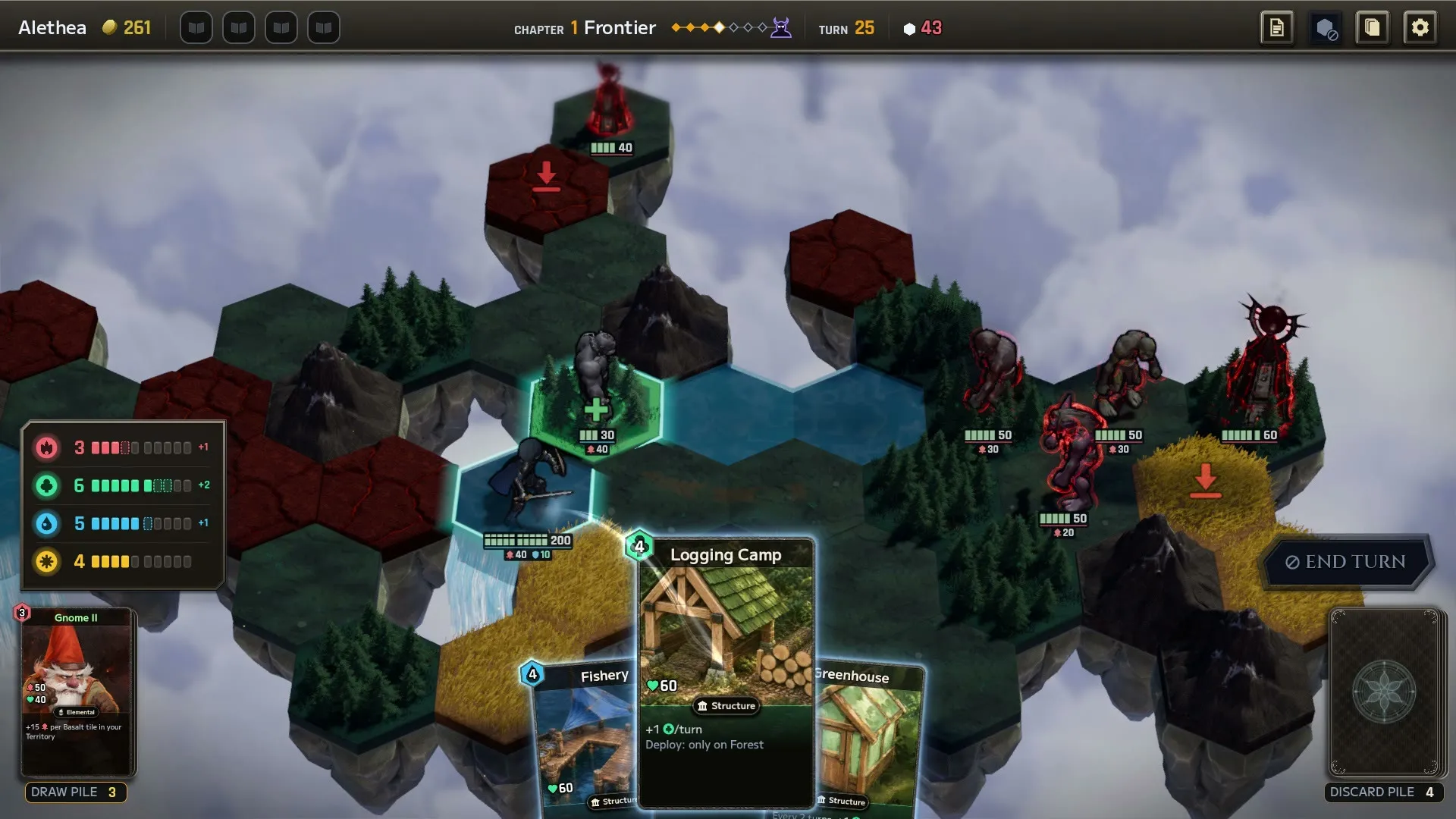
Game board (development build)
1
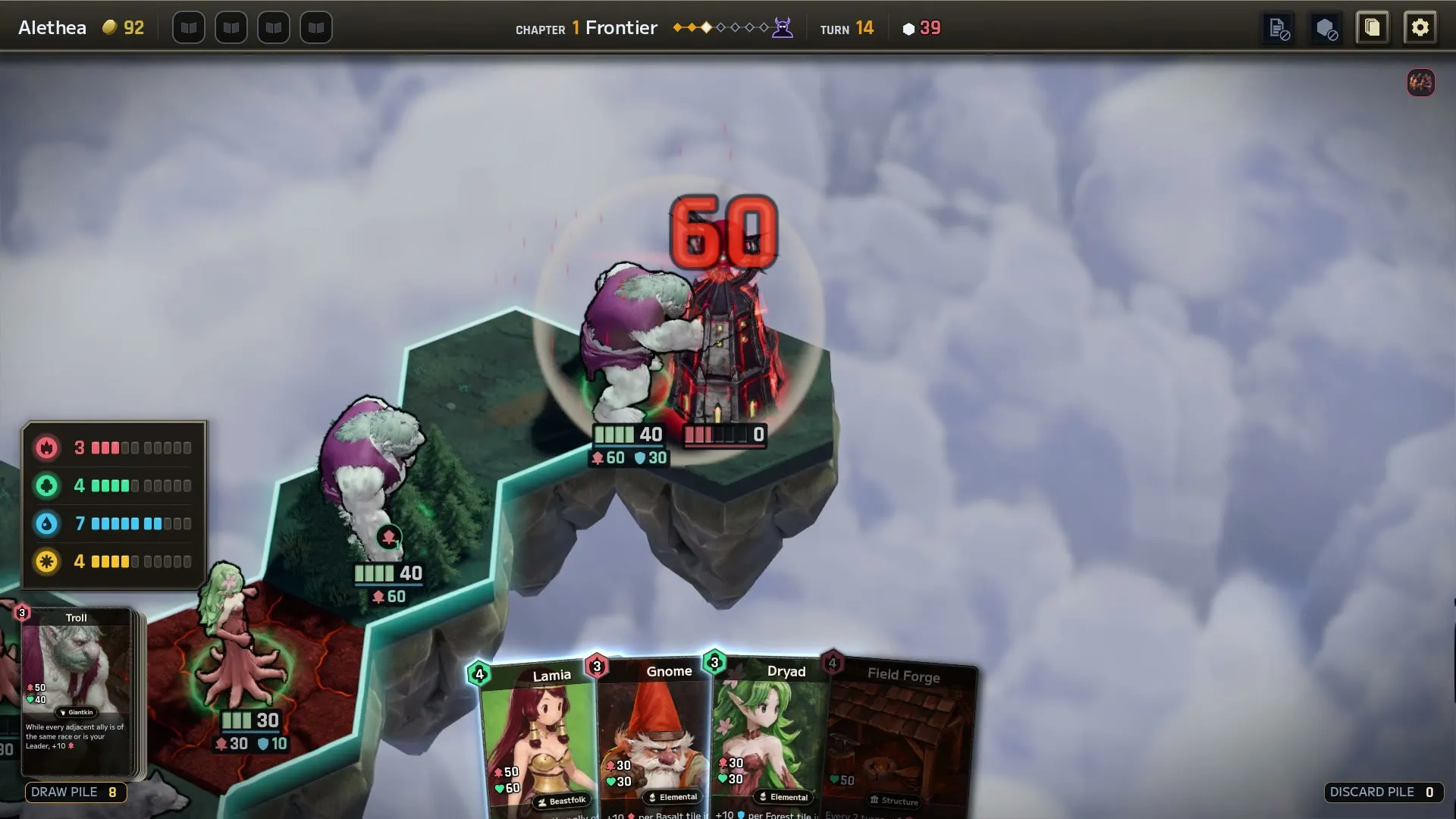
Your handUnit, structure, spell, and other cards. As long as you have the resources, you can play as many as you like each turn.
2
Four colors of resourcesWhat you spend to play cards, with your stock of each color shown: red, green, blue, and yellow.
3
Top of the draw pileThe next card you'll draw. It stays face up.
4
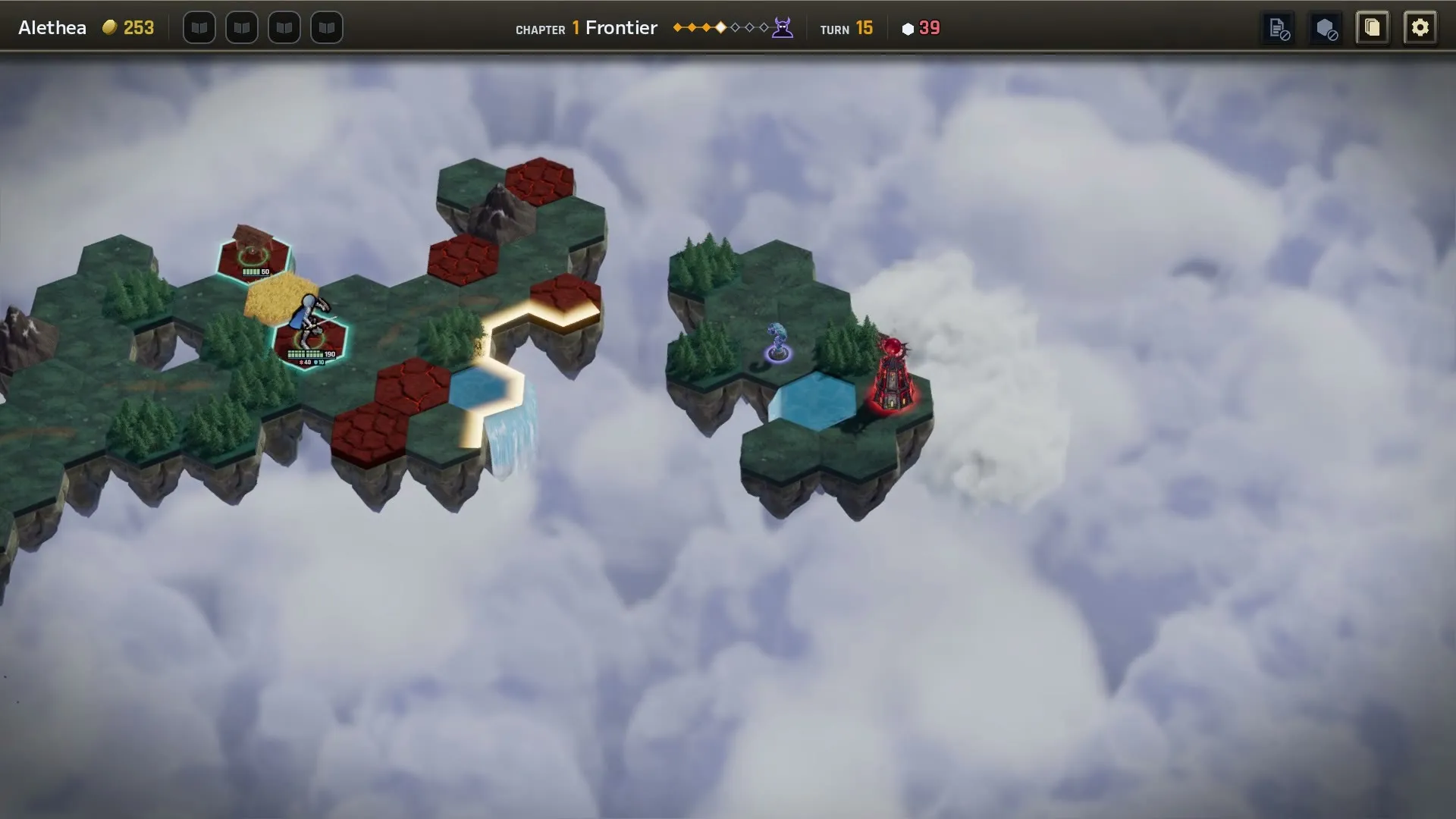
Collapse warning ▲A red ▲ lights up a turn ahead on the tiles that will fall next.
5
Enemy strongholdThe island's objective. Bring it down, and the next island joins.
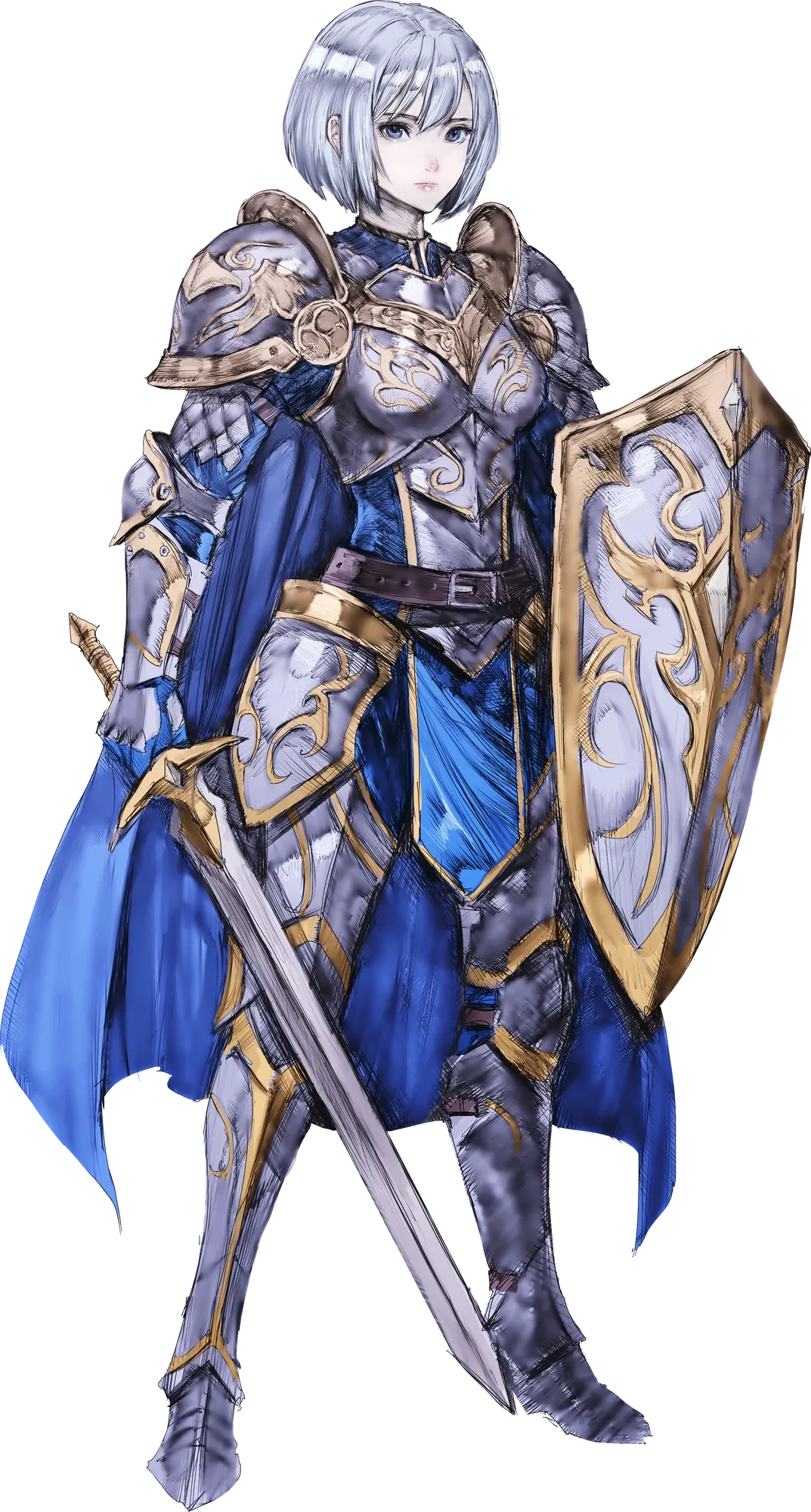
Leader
Alethea the Paladin
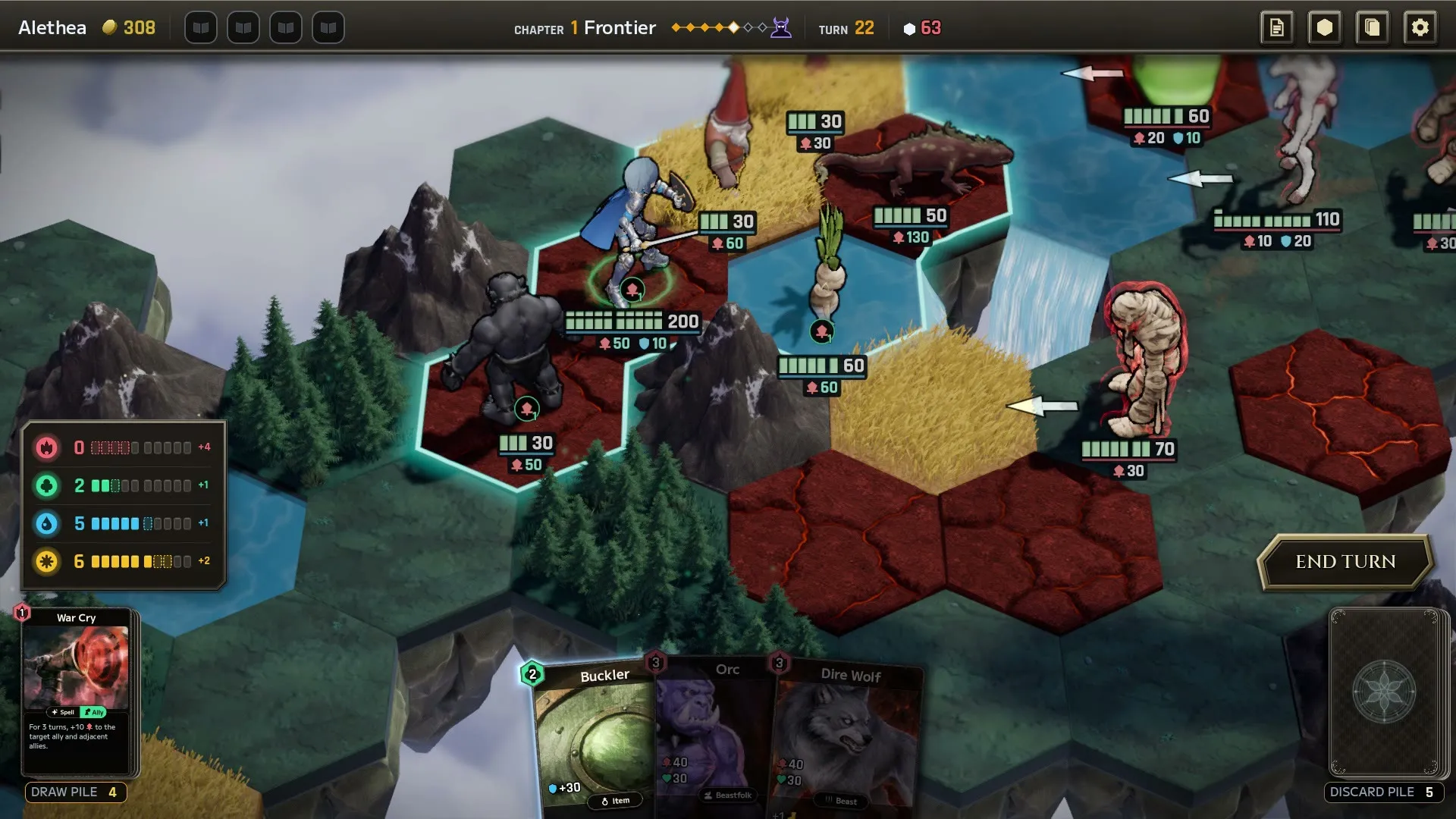
Alethea is one of the leaders who stand on the board, the linchpin who leads your forces. You can summon units and structures right next to her, and of course she can step forward and fight herself. If your leader is struck down or caught in the Collapse, the run comes to an end.
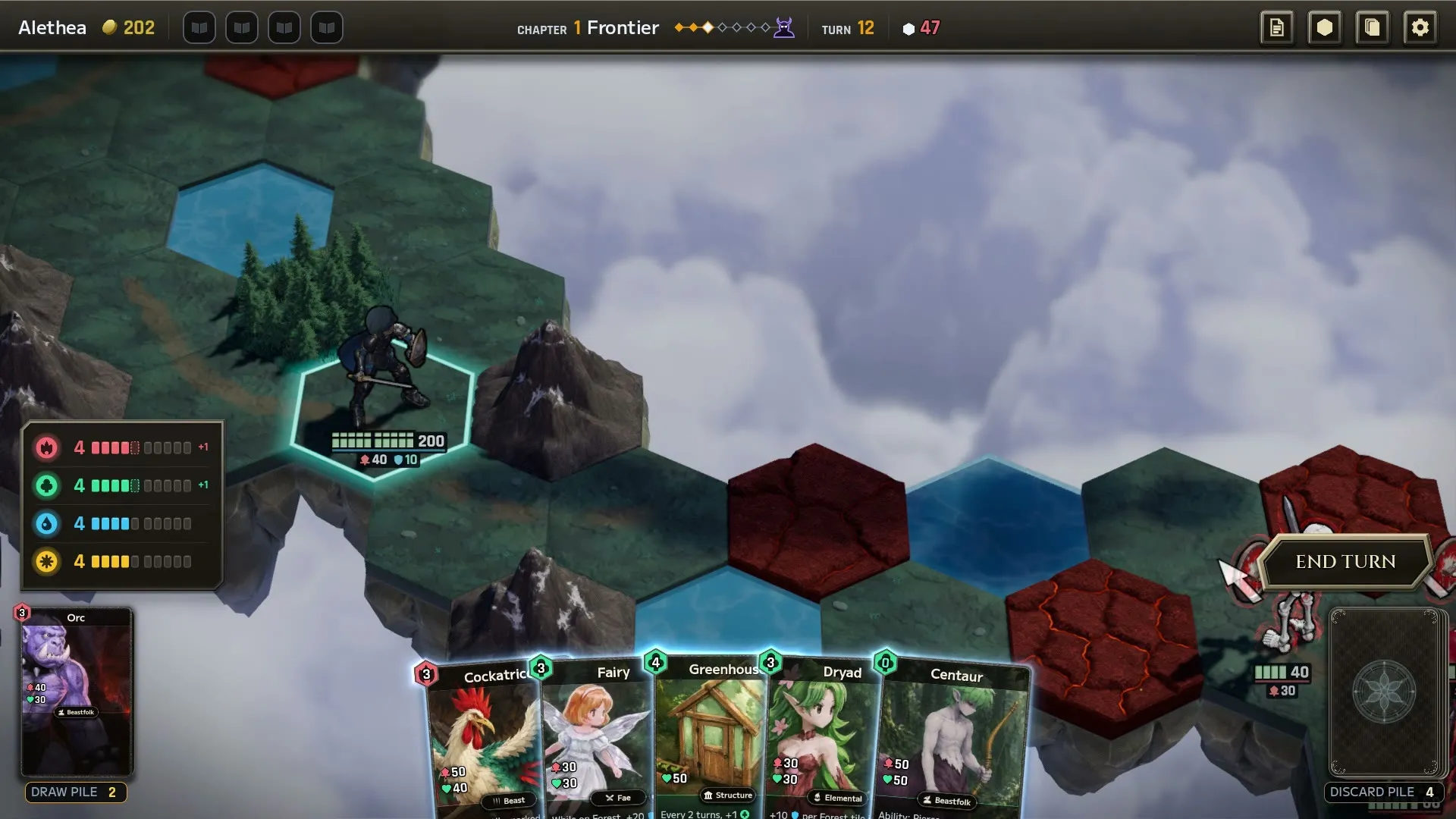
Play as many cards as your resources allow, move your units, and end your turn. Then the enemy moves, and at the start of the next turn the ground crumbles.
As long as you have the resources, you can play as many unit, structure, spell, and other cards as you like in a turn.
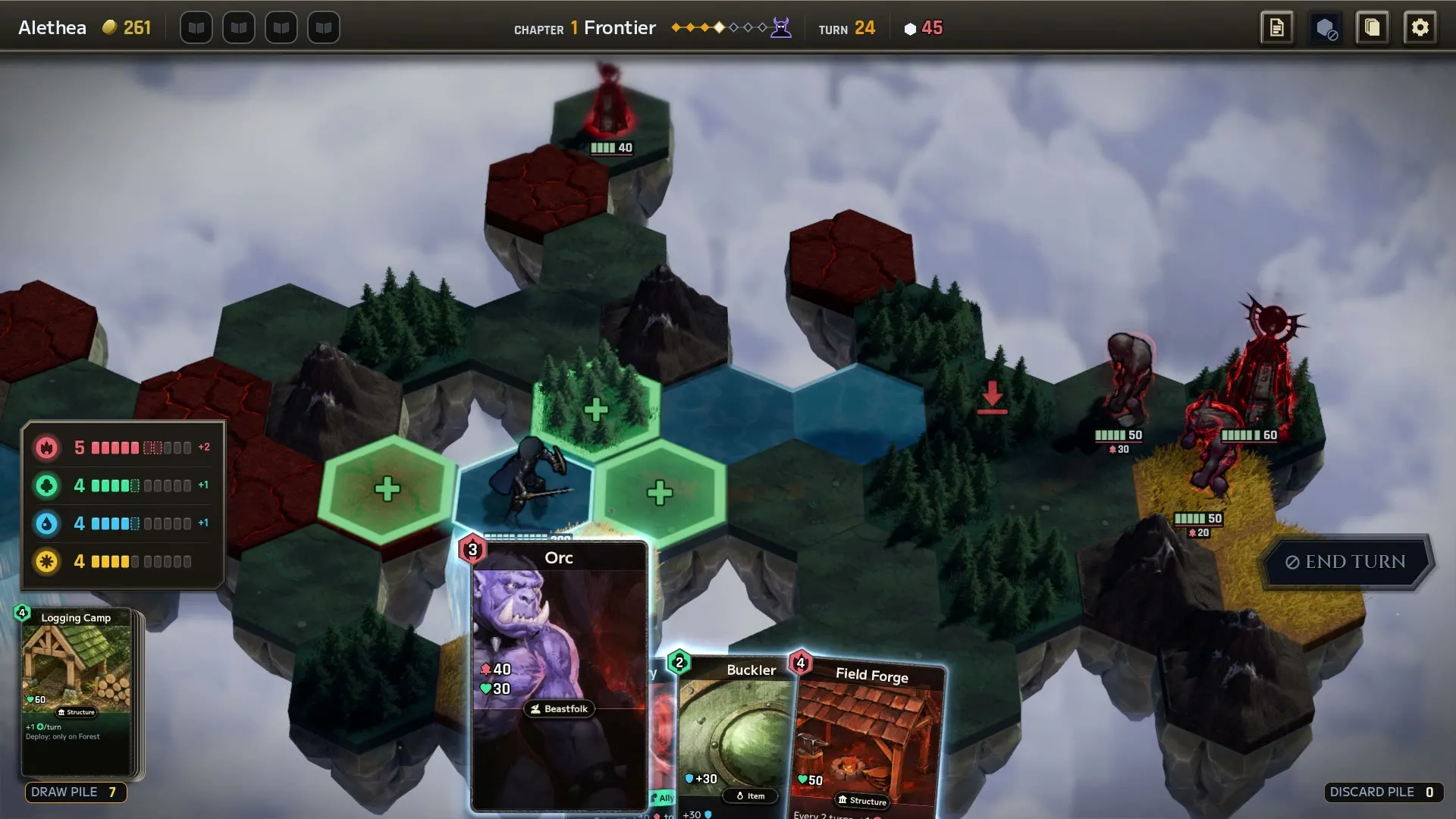
You can summon units and build structures next to your Territory.
Playing cards takes resources in four colors, and moving a unit onto resource tiles such as forests and seas, or building a harvesting structure on them, adds to your income every turn.
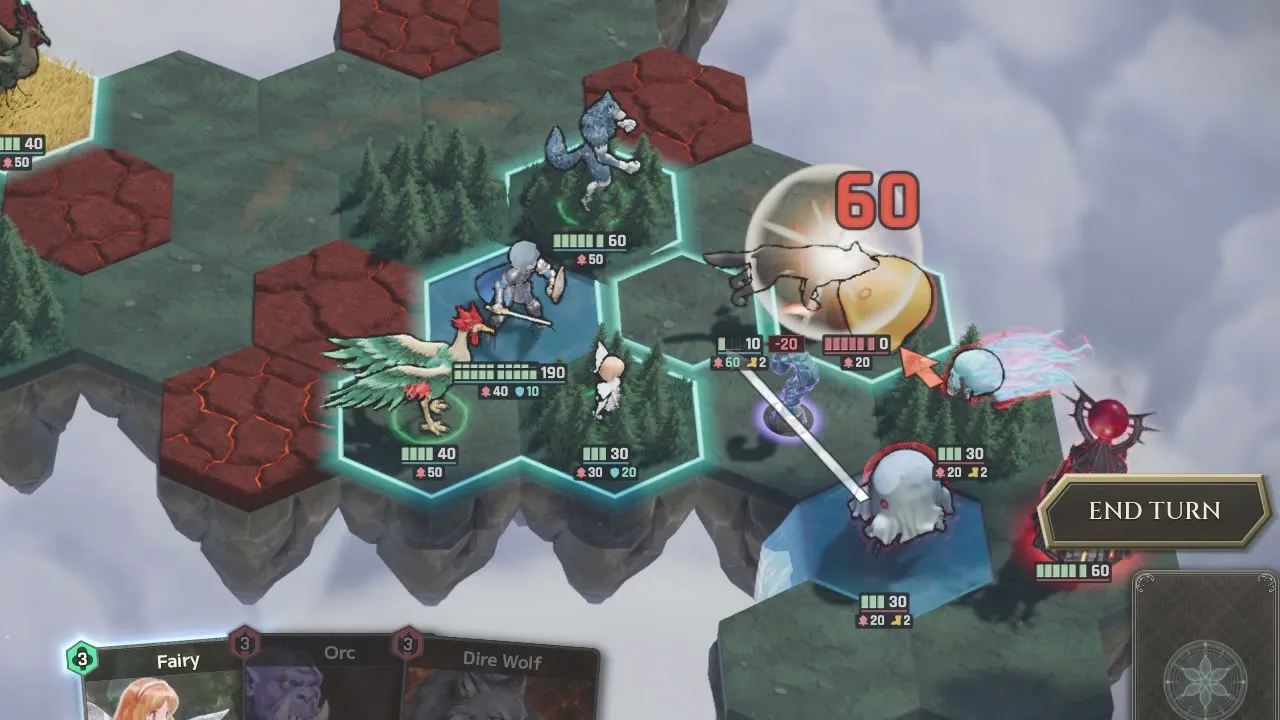
From the turn after they're summoned, units can move or attack. Attacks never miss, and before you strike, you see the damage you'll deal and whether it will take the target down.
You can play a unit card straight onto an enemy, and if it takes the enemy down in one hit, the unit is deployed there.
When you end your turn, the enemies move and attack just as their intents showed.
Game Cycle — 2
One phase
Head for the enemy stronghold on a crumbling island
Build structures, use the terrain, and make the most of Events, then bring down the enemy stronghold and join the next island before the Collapse catches up with you.
At the start of every turn, the ground crumbles away from the edge.
Structures do things like increase your resource income or strengthen nearby allies.
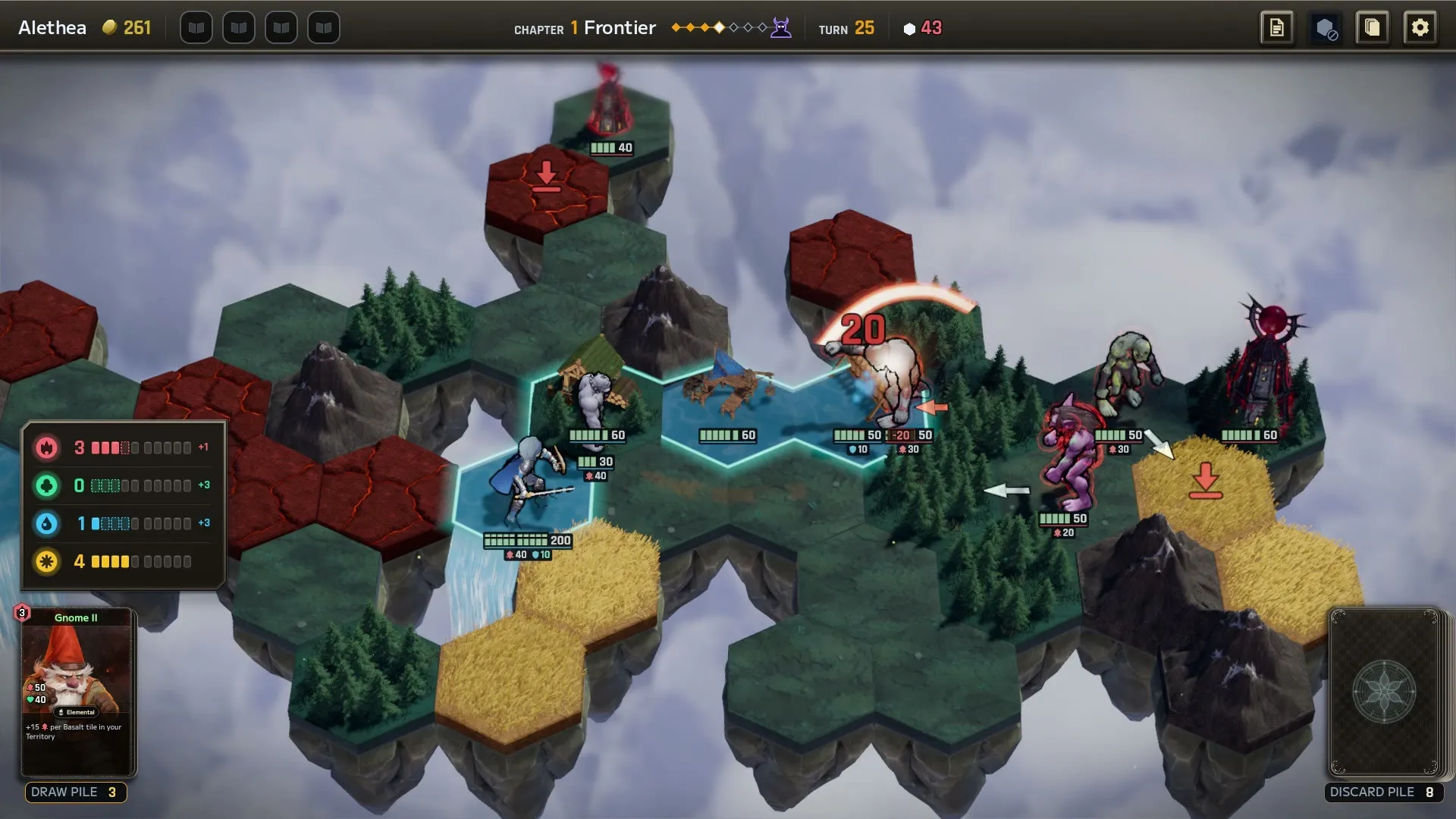
The Gnome's attack goes up the more basalt there is in your Territory.
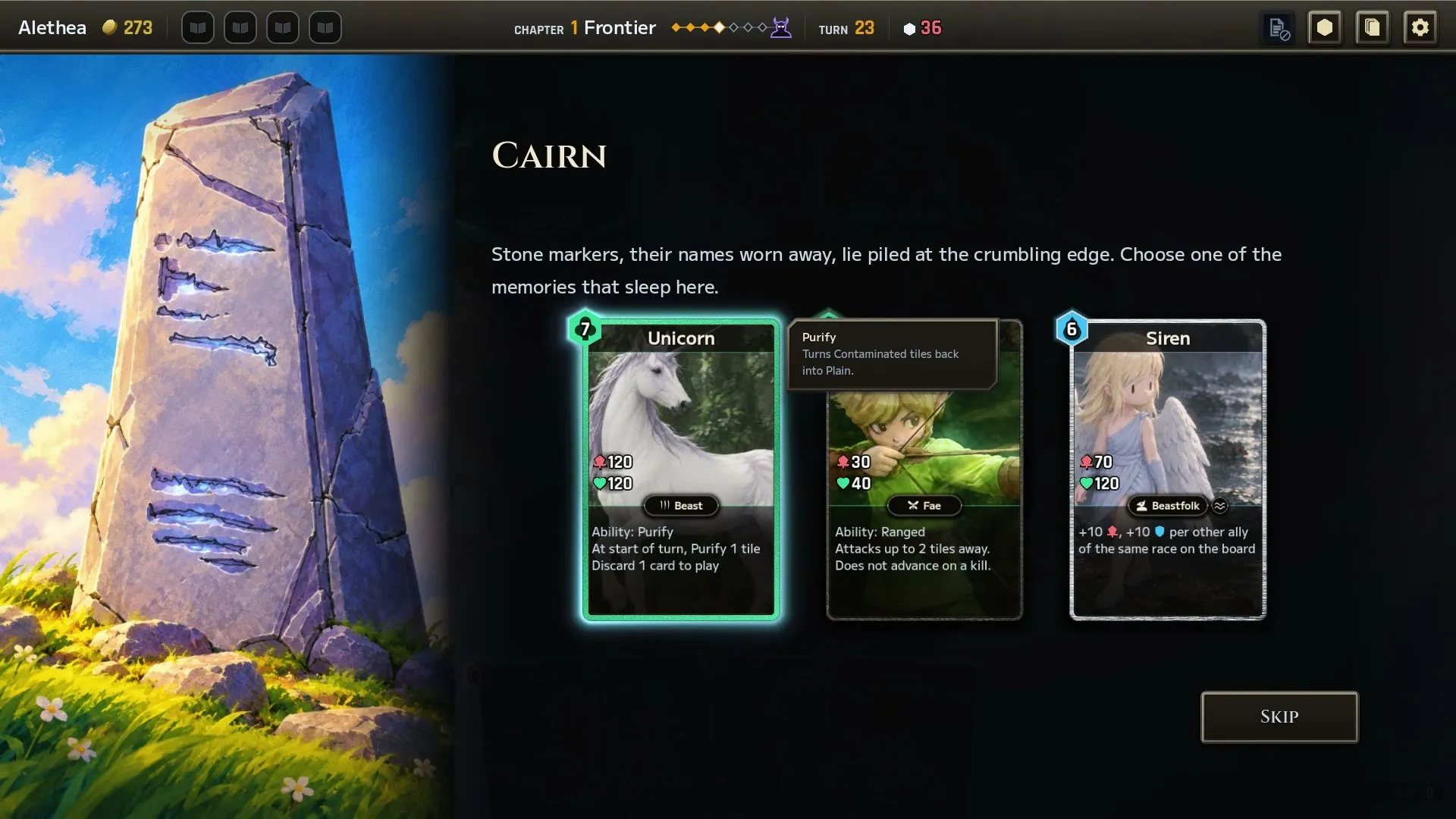
Tiles such as Cairns, Altars, Ruins, and Traders let you trigger an Event when one of your units enters them.
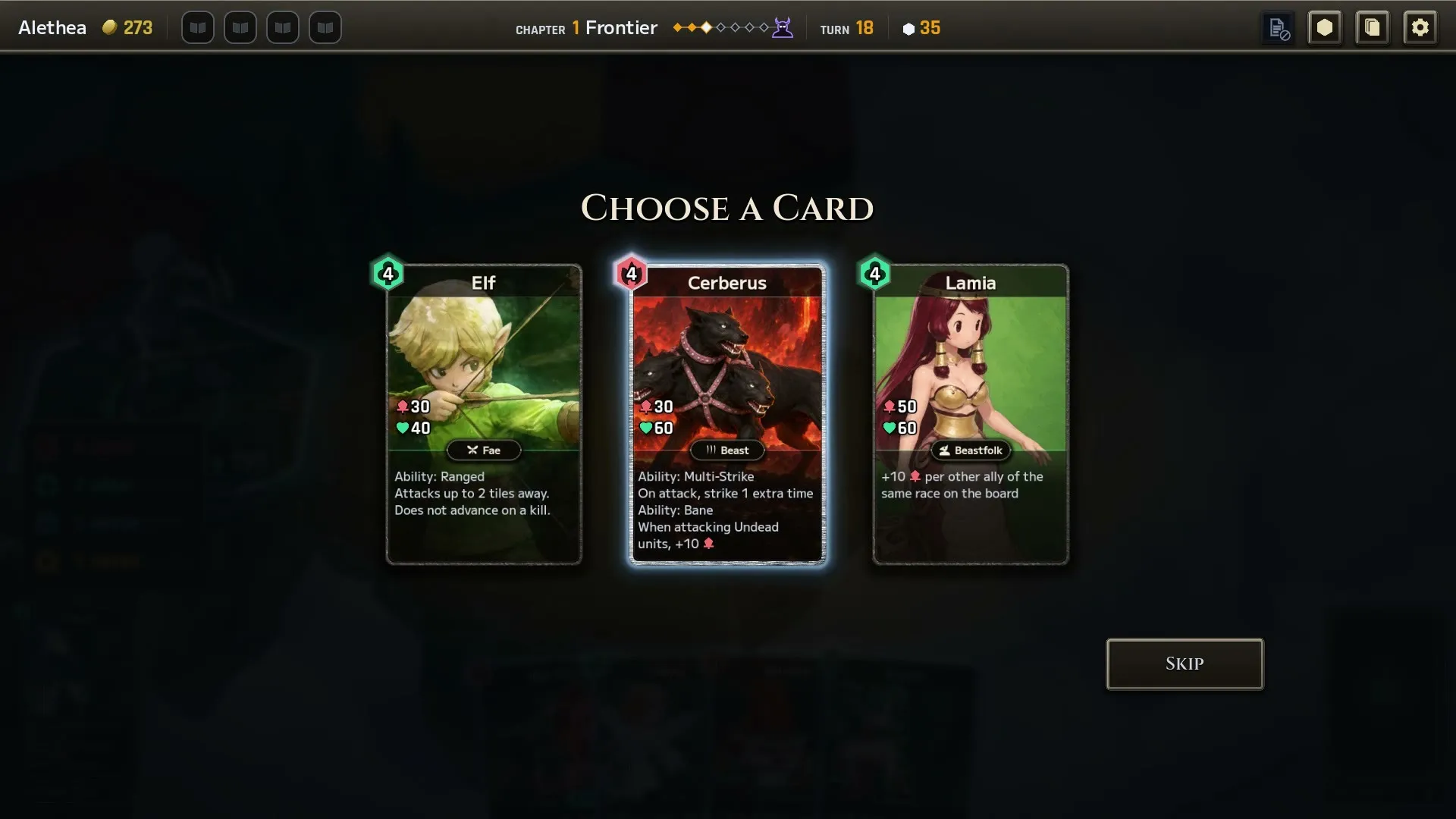
Bring down the enemy stronghold at the far side of the island to clear the phase, and you're offered a choice of islands.
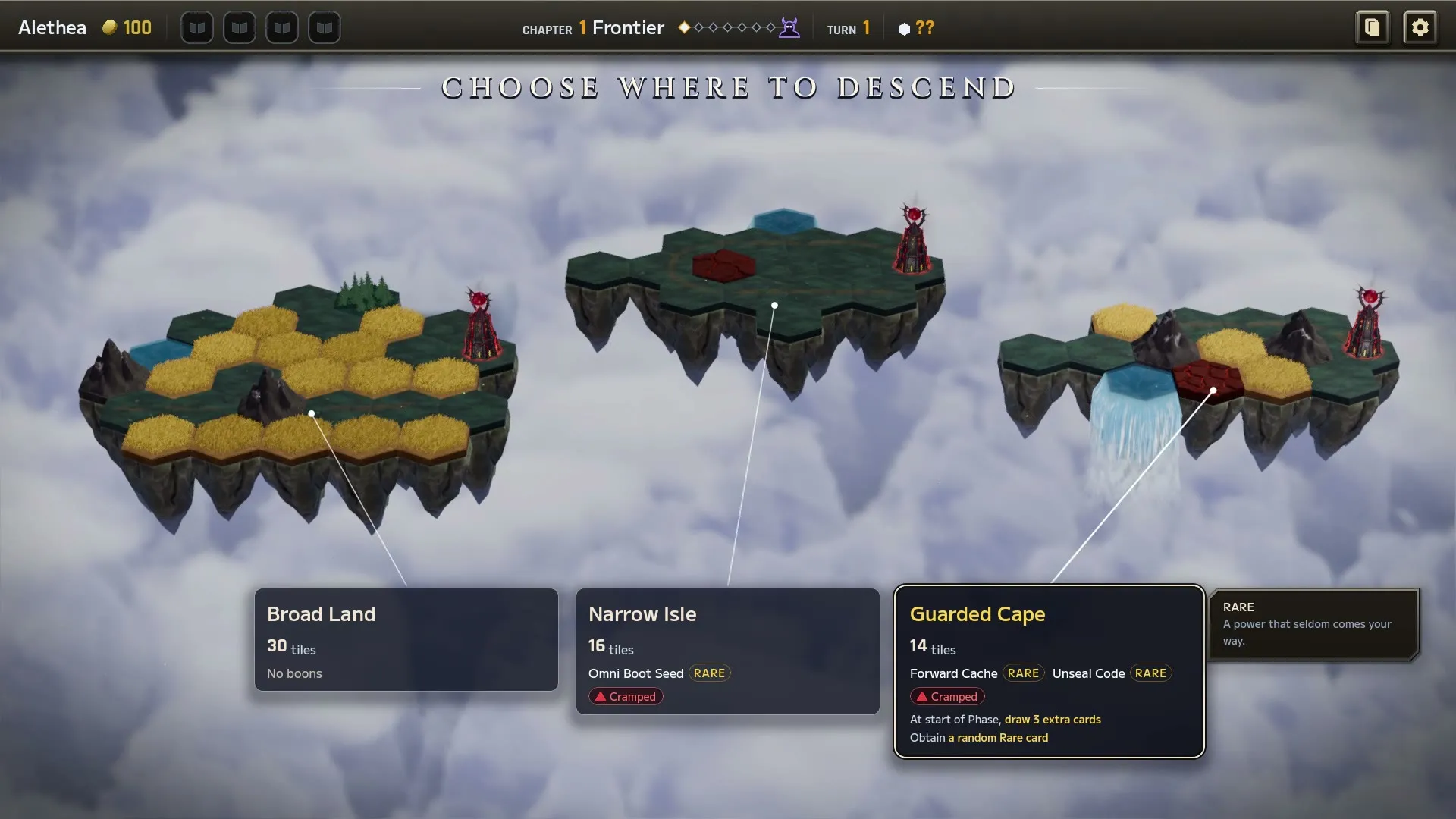
Choose one of the candidates for the next island, and it joins the ground you've held so far to form one larger island.
Game Cycle — 3
One run
Join islands and press on through each chapter
From choosing where to land at the start of a chapter to the boss at its end, you join island after island while growing your deck and relics.
At the start of each chapter, you must choose an island to land on. The smaller the island, the more boons it tends to carry.
Your deck, relics, and gold stay with you across joined islands and changing chapters until the run ends.
The run ends if the Collapse catches you or your leader is struck down.
The last island of a chapter has no enemy stronghold; defeat the boss waiting there to get through that chapter.
With every run
As you keep taking on runs, new cards and features open up. Every time you play, the world of Everbrink grows a little wider.
Into greater difficulty
Word has it there's a higher difficulty called Depth. If you're after a real challenge, it may be worth a try.